
Jordan Basketball Drop Retro OG Style
Air Jordan Kicks Head-to-Head: High-Top vs Low-Top Versions
Choosing between high-top and low-top Air Jordan kicks is one of the most common decisions facing sneaker enthusiasts in 2026. Both styles carry decades of basketball tradition and street cred, yet they serve clearly different functions on and off the court. High-top models characterized Michael Jordan’s career, providing the ankle protection that enabled him rule the NBA through six title campaigns. Low-top Jordans, on the other hand, grew into a casual-focused alternative that focuses on range of motion and summer versatility. Grasping the true differences between these two constructions can help you avoid regret and allow you to construct a more well-rounded sneaker lineup. In this breakdown, we compare performance, everyday comfort, fashion, and pricing so you can form a confident decision on your newest pair of Air Jordans.
The Origins Behind Both Styles
When Peter Moore created the debut Air Jordan 1 in 1985, the high-top build was the unquestioned default for basketball sneakers. The tall collar surrounded Michael Jordan’s joint and evolved into an signature design feature that Nike advertised aggressively during the “Banned” marketing campaign. It was not until the Air Jordan 11 Low dropped in 1996 that Jordan Brand meaningfully ventured into the low-cut design for a numbered shoe. That launch showed that collectors would accept a shortened version of an fan-favorite shoe, paving the way for low-cut versions of almost every signature Jordan. By the mid-2000s, low-top Jordans had grown into a seasonal go-to, routinely depleting alongside their high-top counterparts. Currently in 2026, Jordan Brand drops nearly comparable amounts of high-top and low-top releases each three months, demonstrating even buyer interest across both cuts.
Ankle Protection and On-Court air jordan Performance
High-top Air Jordans extend 2 to 3 inches above the ankle bone, creating a snug collar that limits lateral roll during aggressive movements and jumps. Models like the Air Jordan 1 High and Air Jordan 12 incorporate cushioned collars combined with firm heel cups to secure the entire foot during intense competition. According to a 2024 report published in the British Journal of Sports Medicine, high-top basketball sneakers cut the rate of ankle sprains by approximately 28 percent compared to low-top options in casual athletes. Low-top Jordans, such as the Jordan 1 Low and Jordan 11 Low, forgo some of that ankle support in favor of reduced weight — often removing 50 to 80 grams per shoe. For weekend warriors who run casual games once or twice a week, that weight reduction translates into speedier acceleration and lower exhaustion over prolonged play. The compromise is genuine, though: if you have a past ankle problems, a high-top model with correct lacing remains the more secure pick for any on-court activity.
Comfort for All-Day Wear
In everyday life, ease priorities change significantly, and low-top Air Jordans regularly win out. The shorter collar height removes the pressure point that high-tops can generate against the Achilles tendon during all-day wear. Many users say that low-top Jordans feel broken in after just two or three wears, while high-tops may require five to seven wears before the ankle cushioning fully conforms. Cushioning tech stays unchanged across both cuts — the Air Jordan 1 incorporates the same Air sole unit regardless of height, and the Jordan 11 maintains its full-length Air unit in both variants. Heat is another real-world factor: low-tops enable significantly more airflow around the ankle, making them the top pick for hot weather when foot temperature turns into an problem. For colder months or long days on your feet, the heat retention delivered by a high-top collar can actually be an advantage, retaining warmth held around the joint.
Style Impact and Styling Range
From a visual standpoint, high-top Air Jordans command eyes and serve as a centerpiece in any ensemble. The Air Jordan 1 High, in colorways like Chicago, Bred, and Royal, perpetually ranks among the most shot shoes on Instagram and TikTok, generating millions of tagged posts on Instagram alone. High-tops complement skinny or tapered jeans, track pants, and casual shorts that enable the full silhouette to be visible — concealing a high-top under loose jeans nullifies its design intent. Low-cut Jordans, on the other hand, provide a sleeker profile that pairs seamlessly with a greater range of fits, encompassing straight-leg jeans, casual trousers, and even semi-formal pants. Style-conscious shoe lovers in 2026 frequently deploy low-tops as a versatile option that connects streetwear and business-casual settings. The styling flexibility provides low-cut models a slight leg up for sneakerheads who need a single pair to address different dress codes throughout the week.
Color and Material Considerations
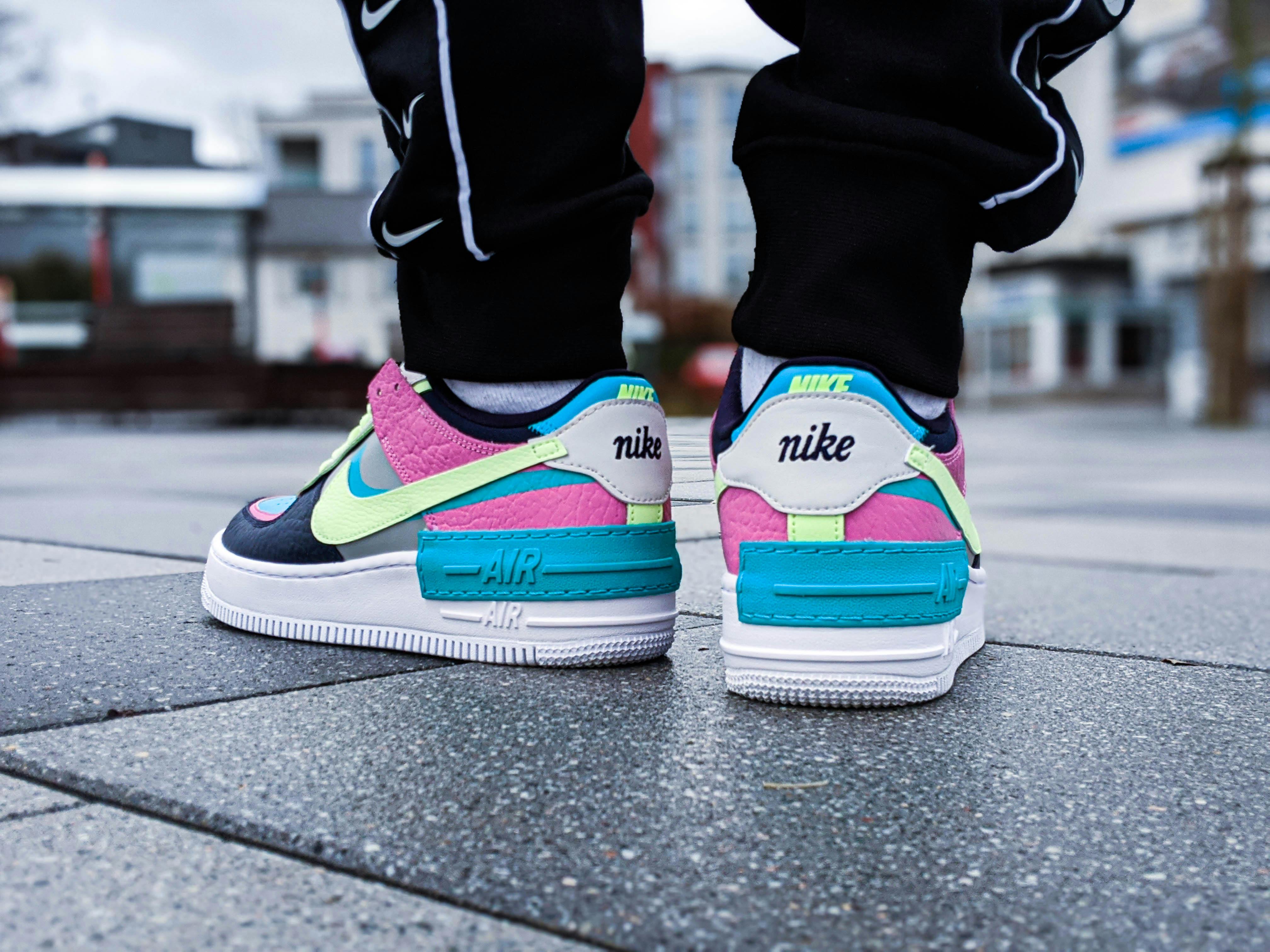
High-top Air Jordans generally boast more canvas, which enables creatives to incorporate multiple color blocks and contrasting fabrics across the shoe’s upper. This extra real estate is why celebrated editions like the Jordan 1 High “Union LA” and “Travis Scott” collabs look so design-dense — there is plainly more canvas to employ. Low-tops shrink that same design language into a reduced canvas, which can either seem sleeker or appear cluttered depending on the color combination. Leather, nubuck, suede, and patent leather all appear across both cuts, though premium materials often show up more frequently in high-cut special editions. In terms of durability, the additional material on a high-top means a bit more defense against marks around the ankle. Collectors prioritizing protecting their Jordans pristine for years commonly gravitate toward taller versions for this functional consideration alone.
High-Top vs Low-Top: Comprehensive Face-Off
| Category | High-Top Air Jordans | Low-Top Air Jordans |
|---|---|---|
| Ankle Protection | Superior — extends past the ankle | Minimal — sits below ankle |
| Weight per Shoe | 400–500 g per shoe | 340–420 g per shoe |
| Best Season | Fall / Winter | Spring / Summer |
| Outfit Compatibility | Streetwear and athletic | Street, casual, business-casual |
| Break-In Period | 5–7 wears | 2–3 wears |
| Resale Markup | Usually higher | Moderate |
| Breathability | Moderate | Superior |
| Typical Retail Price | $170–$200 | $130–$170 |
Resale Value and Collectibility
In the resale space, high-top Air Jordans have historically earned greater markups than their low-cut counterparts. Data from StockX demonstrates that the Air Jordan 1 High OG maintains a 40 to 60 percent increase over retail in in-demand editions, while the Jordan 1 Low OG commonly shows a 15 to 30 percent markup. Ultra-limited high-tops, especially those connected with collabs with designers like Virgil Abloh or Travis Scott, have climbed to resale prices exceeding $2,000 in mint condition. Low-tops are starting to close that gap, however, as Jordan Brand focuses more intensely in special low-top launches aimed at fashion-focused buyers. The Travis Scott x Air Jordan 1 Low Reverse Mocha, for example, fetched significantly above $1,500 on aftermarket sites throughout 2023 and 2024. For collectors prioritizing future appreciation, high-top models remain the more reliable choice, but the Jordan Low market is maturing rapidly and should not be overlooked.
Which Should You Buy?
Your selection ultimately is determined by how and where you intend to use your Air Jordans. If basketball performance is important to you — even recreationally — the support benefits of a high-top are undeniable, and the added ankle support can avoid injuries that would sideline you for weeks. For everyday wear across varied settings, a low-top Air Jordan provides unrivaled adaptability, reduced mass, and an faster break-in experience that fits right into a hectic routine. Value-minded consumers will also benefit from that low-tops commonly retail for $20 to $40 less than their high-top versions, extending your sneaker budget more. If possible, a diverse collection has at least one of each: a high-top for bold outfits and cooler weather, and a low-top for easy summer wear. Review your present clothing collection, consider your activity level, and factor in your regional weather before deciding. Whichever format you select, you are purchasing a shoe built on over 40 years of sneaker innovation from Jordan Brand.
The Ultimate Assessment
The high-top versus low-top argument has no universal winner because both cuts shine in separate situations. High-top Air Jordans bring top-tier ankle stability, more impressive aftermarket values, and a more dramatic aesthetic impact that rules street style photos and sneaker conventions. Low-top Air Jordans fire back with reduced weight, shorter adjustment times, more expansive outfit compatibility, and a more affordable cost for first-time collectors. In 2026, Jordan Brand keeps on push boundaries across both styles, launching new cushioning technology and recycled materials that enhance both options year over year. The wisest strategy is to assess each launch on its individual strengths rather than applying a universal rule for one format over the other. Whether you lace up highs for a weekend sneaker meet or step into a low-top pair for a summer cookout, the Jumpman logo on your foot carries the same iconic prestige.